What Defines Alternative Bridal Style in British Bridalwear
Stepping outside traditional bridal codes doesn't mean abandoning elegance. British designers have built a distinct approach to alternative bridalwear – one rooted in genuine fashion sensibility rather than novelty for its own sake. The result is bridal dressing that feels personal, considered and often quietly radical.
Colour Beyond White and Ivory
Blush, champagne and powder blue read as soft and romantic, barely a departure from white at first glance. Black accents and metallic embroidery are a different proposition entirely – graphic, directional, occasionally theatrical. Designers like Ghost and Halfpenny London have long understood that colour shifts mood before it shifts meaning. A tonal sage gown signals something; a heavily embroidered champagne column signals something else entirely.
Unusual Proportions and Unexpected Silhouettes
Asymmetric necklines, high-low hems and exaggerated sculptural sleeves change how a bride occupies a room. Column shapes and drop-waist cuts strip back volume in favour of elongation, while mini lengths – still relatively rare in British bridalwear – carry a confident, almost defiant energy. These aren't just stylistic choices; they fundamentally alter presence.
Separates and Nontraditional Styling Pieces
Bridal separates offer something a single gown rarely can – the ability to restyle across the day. A tailored trouser paired with a silk camisole, a detachable overskirt worn for ceremony then removed for the reception, a structured cape replacing the veil entirely. Versatility is the real appeal here, alongside the freedom to express a more personal aesthetic.
How Designers Build Drama Through Texture, Transparency and Influence
Fabrication choices often do more work than silhouette in alternative bridal design. The most striking non-traditional gowns earn their impact through what they're made of and what they reference – handled with enough restraint to stay unmistakably bridal.
Transparency and Contrasting Textures
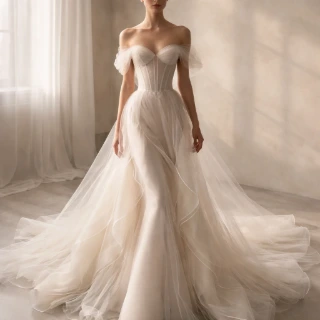
Sheer illusion tulle layered over a structured corset creates visual tension that a single fabric simply can't. Designers pair matte crepe with gloss organza, or set heavy floral embellishment against clean unadorned panels, to generate depth without excess. Exposed boning beneath sheer chiffon reads as intentional architecture rather than undress. The contrast does the drama.
Translating Botanical, Vintage, Bohemian and Rock References
Botanical influence arrives as three-dimensional appliqué or trailing embroidery rather than a print. Vintage references surface through Edwardian puff sleeves or bias-cut satin that recalls 1930s glamour. Bohemian ease comes via relaxed chiffon or crochet-trimmed hems. Rock leanings show in sharper tailoring, darker ivory palettes, or subtle stud detailing – never full costume.
Why These Details Still Need Bridal Restraint
One dominant idea, supported by quieter elements, is what separates a considered bridal look from a confused one. A sheer back needs a clean front. Rock-adjacent styling needs softness somewhere. Editing is the actual skill.
The Strongest Alternative Bridal Looks Feel Deliberate, Not Random
There's a real difference between a bridal look that breaks convention with intention and one that simply accumulates unusual choices. The most arresting alternative dresses – whether built around a single blush colour story, an asymmetric hem anchored by clean tailoring, or sheer organza layered over structured boning – work because every element answers to the same visual idea. Texture, silhouette, and detail all pull in the same direction. Restraint matters even when the brief is bold. A bride in a caped ivory jumpsuit with statement sleeves doesn't need embellished boots and a floral crown competing for attention. Strip the look back to its strongest idea, and that's where the coherence lives.